
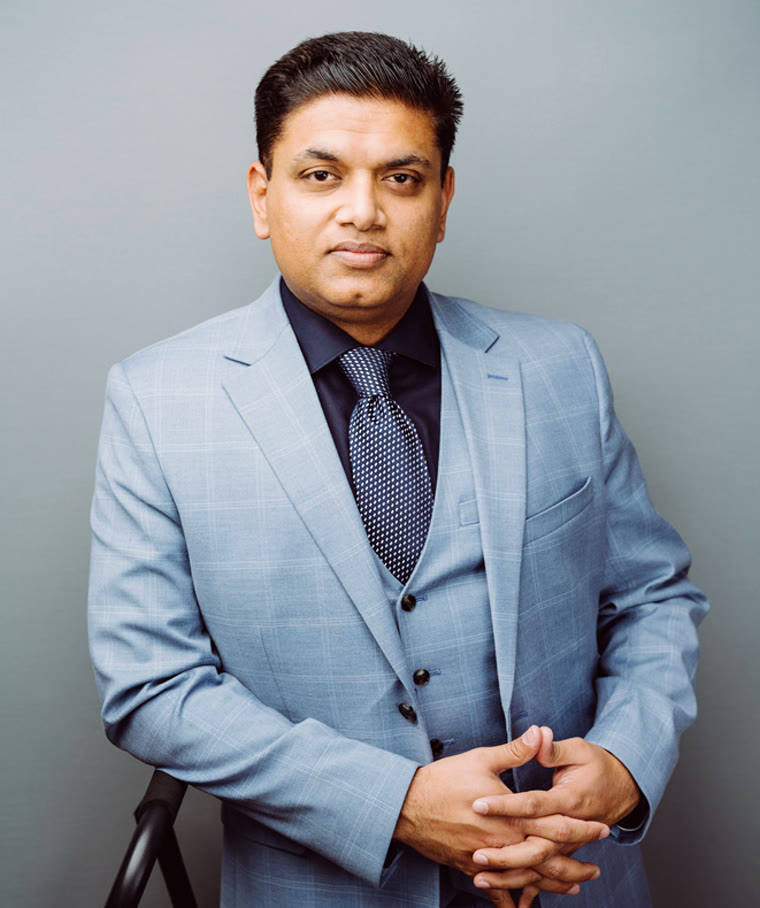
When your finances span a corporation, multiple properties, investments and a legacy to pass on, fragmented advice is expensive. Yogesh Bansal brings the rare combination of Certified Financial Planner (CFP®) and Chartered Professional Accountant (CPA®) credentials — coordinating tax, investments, insurance, estate and legacy planning under one discreet, trusted relationship.
High-net-worth families rarely fail for lack of good intentions. They lose value in the seams — between an accountant who files the return, an investment advisor who never sees the corporate structure, and an insurance agent who is never told about the estate plan.
Corporate wealth trapped inefficiently. Tax exposure that compounds year after year. An estate that transfers to the next generation more heavily taxed than it needed to be. Each is solvable — but only when one Financial Planner holds the whole picture.
That is the role Yogesh plays. Dual CFP® and CPA® credentials mean your tax, investment, insurance and estate strategy are designed together, then implemented in concert with your accountant and lawyer — quietly, precisely and with your family's long horizon in mind.
Each strategy below is more powerful because it is planned alongside the others — never in isolation.
As a CPA, Yogesh designs corporate and personal strategies to reduce lifetime tax — income splitting, remuneration mix, and the efficient movement of wealth in and out of your company.
Permanent and corporate-owned life insurance used deliberately — to shelter growth, fund estate taxes and transfer wealth through the Capital Dividend Account.
Holding-company and personal portfolios structured for tax efficiency, risk and long-term compounding — with attention to how each account is drawn down in retirement.
Estate freezes, trusts, beneficiary designations and probate-aware structures so your wealth passes to the next generation with clarity — and with as little erosion as the rules allow.
Planning the eventual transition of your business — to family, partners or a buyer — with buy-sell funding, key-person protection and a tax-aware exit that protects the value you built.
Preparing the next generation, funding education and giving, and aligning the whole family around a shared plan — so wealth is not only preserved, but understood and stewarded.
For families with significant assets, the hardest questions are rarely about the money itself. They are about how it transfers, who is prepared to receive it, and what it is meant to achieve.
Family conversations and a shared understanding of the plan — so heirs are prepared to receive wealth responsibly, not just informed of it after the fact.
Estate freezes, trusts and equalization strategies that move wealth to children and grandchildren with as little tax erosion as the rules allow.
Donor-advised funds and charitable gifts of securities or insurance, structured to reflect what your family values — while reducing tax along the way.
A clear plan for a business, cottage or other assets that not every heir will inherit — so the transition is fair, funded and does not divide the family.
The concepts below are educational and simplified. They illustrate how a coordinated CFP® + CPA® approach can be applied, but every family's structure is different — each strategy should be confirmed for your specific circumstances with your tax and legal advisors before it is acted upon.
For incorporated professionals and business owners, the way income is drawn and wealth is held often matters more than the return itself. Thoughtful planning looks at the entire lifetime tax bill, not a single year.
Permanent life insurance owned by a corporation is one of the most tax-efficient tools available to Canadian business owners. Growth inside the policy is generally sheltered, and the death benefit interacts with a mechanism called the Capital Dividend Account.
When wealth includes a business, real estate or a cottage that not every heir will inherit, fairness becomes a planning problem. The goal is to transfer assets smoothly while treating each beneficiary equitably.
Many families want their wealth to reflect their values. Structured giving can be deeply meaningful and, when planned well, tax-effective for both the donor and the estate.
A measured, discreet path — designed around your time, your family and your existing advisors.
A confidential conversation to understand your family, business, entities and objectives in full.
A coordinated, tax-aware plan spanning corporate structure, investments, insurance and estate.
Executed in concert with your accountant and lawyer, so every document and structure aligns.
Regular reviews keep the plan current as your business, tax law, markets and family evolve.
There is no single legal threshold. In practice, private-wealth planning becomes valuable when your affairs grow complex — for example when you hold investable assets in the seven figures, own a corporation or holding company, have multiple properties, or face meaningful estate and tax exposure. If your finances span several entities and advisors, you likely benefit from a coordinated approach, regardless of an exact number.
As a CFP® and CPA®, Yogesh speaks the language of both your accountant and your estate lawyer, and works alongside them rather than around them. He can help frame the tax and insurance strategy, prepare the questions and structures for your lawyer to draft, and keep everyone aligned so your will, corporate structure, insurance and investments all point in the same direction. Your existing professional relationships stay in place.
A corporation can own a permanent life insurance policy on a shareholder. When the death benefit is paid, the portion exceeding the policy's adjusted cost basis is generally credited to the company's Capital Dividend Account (CDA), which can allow capital dividends to be paid to shareholders or the estate on a tax-free basis. It is a widely used strategy to move corporate wealth to the next generation efficiently, but the rules are technical and outcomes should be confirmed for your specific situation.
Canada has no formal estate tax, but a deemed disposition at death can trigger significant capital gains, along with provincial probate fees (rules and rates vary by province). Planning may include income splitting, estate freezes, trusts, charitable giving, beneficiary designations and life insurance to fund the tax liability so assets do not have to be sold. These are educational examples; the right combination depends on your circumstances and should be confirmed with your tax and legal advisors.
Legacy planning goes beyond a will. It is the coordinated process of preparing both your wealth and your family for its transfer — minimizing tax on what passes to the next generation, structuring how and when heirs receive it, and, where it matters to your family, building a philanthropic or values-based component into the plan.
Where families want it, Yogesh can help facilitate conversations about the plan — what is being left, why, and what is expected of those receiving it — alongside your lawyer's formal documents. The goal is a family that understands the plan before it takes effect, rather than one learning about it for the first time at a difficult moment.
No. Your initial discovery consultation is complimentary, confidential and carries no obligation. It is a private conversation to understand your family, your business and your objectives, and to show you where a coordinated strategy could add value before you decide whether to proceed.
Discreet, unhurried and entirely confidential. Discover what a single, coordinated CFP® + CPA® strategy can do for the wealth you've built — and the legacy you intend to leave.